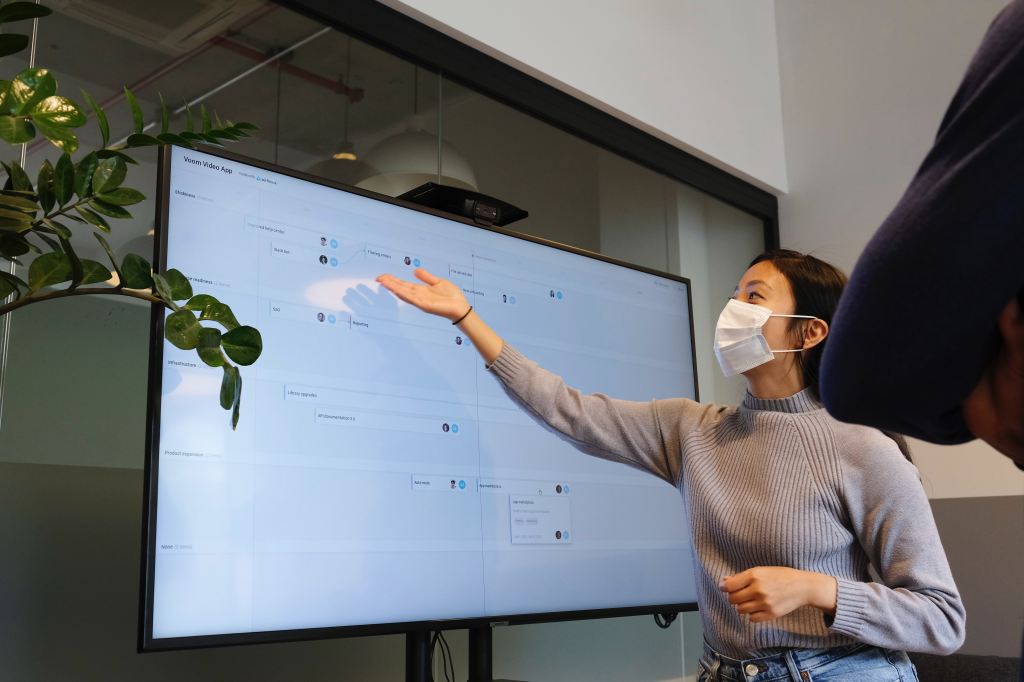
I created a lecture presentation targeted to adult learners in the Department of Technical Communication. My degree plan allowed me to enroll in graduate courses as replacements for certain required undergraduate courses.
One of the courses I enrolled in was Studies in the Teaching of Technical Communication, a required course for graduate students who want to work as Teaching Fellows in the department. At the time, I was working as a Graduate Writing Tutor supporting all students enrolled in TECM courses, and I was elated to take a course that would strengthen my skills at my job back then. Little did I know that I would later enter the field of technical training as a career.
This course prepared me to instruct adults in both academic and professional settings, covering topics such as adult learning, diplomacy, and lecturing effectively. We also covered some of the major assignments in TECM 2700, which is the primary introductory course assigned to Teaching Fellows.
Background
One of my assignments was to select a topic from the TECM 2700 textbook, Strategies for Technical Communication in the Workplace, by Laura J. Gurak and John M. Lannon, and create a slide deck for a lecture on the topic. I chose to discuss technical style—specifically, editing for conciseness. Conciseness is one of my favorite communication topics to learn about and discuss. My goal was to create a presentation and accompanying activity that would span a 60-minute class period.
Process
First, I thoroughly read the chapter on editing for conciseness. The chapter is broken down into actionable subsections, which I used to help me decide what to present in my slide deck. I chose to present on Clean Out Clutter Words and Delete Needless Qualifiers.
After selecting subtopics from the chapter on technical style, I took notes in my own words on the content. Ironically, taking notes on removing clutter words and unnecessary qualifiers helped me catch instances where I had used them in my own copy.
The next step was to design a brief hypothetical activity to help students synthesize the material presented in class. I chose to include a make-believe worksheet on clutter words and needless qualifiers for students to work through in groups and then discuss at the end of class.
When it was time to assemble the presentation, I opened by asking students a question they could relate to: “Have you ever read a sentence so wordy that it made no sense?” I phrased it this way to simplify the topic as something everyone has experienced in their life. This question would be intended as a discussion to begin class, not to exceed five minutes.
I also focused on using minimal text on each slide. People can’t listen and read effectively at the same time; they can generally do one very well, or do both ineffectively. Therefore, when slides have too much text, people are often challenged to also listen to the speaker, who is generally the main focus of the presentation. I designed the slides to support me as a speaker, rather than compete with me.
Finally, I added a visual progress bar at the bottom of each slide so that students could gauge their progress in the lecture. This was a personal decision, as I find it much easier to pay attention to a presentation when I know “where” the speaker is in the presentation. Though I know not everyone cares, it was a small touch added to empathize with the students.
Result
Please see my final presentation below. This was one of my favorite assignments that I did for this course, and I learned a ton about presenting and designing instructional material. One challenged I encountered was keeping the presentation short enough. I was inclined to include lots of information about the subject because I found it personally interesting. However, I quickly realized that I had exceeded the given time constraints, and I learned to condense the material to only what was necessary, a skill that I’ve carried into my current role.
 Jillian Garcia